

A Healthier Home Starts With How It Works
A home should support the way you live, from the air in your bedroom to the light at your kitchen table. TDA’s Healthy Home Guide helps you understand how layout, materials, the building envelope, and mechanical systems work together—so you can ask better questions before you renovate or build.
Look at the Whole Home
Choosing one material or upgrading one piece of equipment cannot answer every question about your home. Begin with the relationships between the spaces you use and the systems that support them.
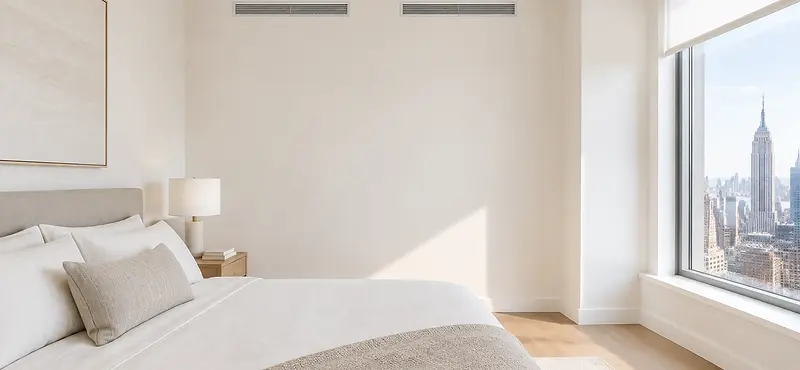
01 / Air + Ventilation
Understand where outdoor air enters, how cooking and bathroom exhaust leave, and how filtration fits into the overall strategy.

03 / The Building Envelope
Look at how walls, roofs, windows, insulation, and air sealing work together. The transitions between components matter as much as the individual products.

04 / Light + Comfort
Consider where daylight reaches, where glare develops, and how windows, shading, heating, and cooling affect the experience of each room.

05 / Healthy Materials
Consider rain, plumbing, condensation, drainage, and drying together. A material choice only makes sense in the conditions where it will be installed.
What This Means for a New York Home
In an apartment, co-op, or condo, design decisions must respond to the building’s shared systems and alteration requirements. In a townhouse, there may be more opportunity to coordinate the envelope, windows, ventilation, and layout across the whole building.
The useful starting question is: what can this property support, and which decisions need to be coordinated before construction begins?
Choose Your Next Step
Want to understand your current home?
Use the Healthy Home Assessment to reflect on everyday conditions and identify topics worth exploring further.
Preparing to renovate or build?
Build Without Regrets introduces the decisions that become difficult to change once construction is underway.
Already planning a substantial project?
Tell us about your property, your priorities, and where you are in the process. We can help identify the most useful next step.
Questions About a Healthier Home
What is a healthy home?
A healthy home is designed and maintained with attention to indoor air, moisture, comfort, daylight, materials, and the ways people use it. These factors need to be considered together.
Can I apply these principles to an apartment renovation?
Yes. The available improvements depend on the apartment, shared building systems, alteration rules, and project scope. Early coordination helps identify realistic opportunities.
Does the Assessment replace a professional evaluation?
No. It is an educational starting point based on your responses. It does not establish concealed conditions or replace project-specific professional review.